
Wisdom teeth—the third molars at the back of the mouth—usually emerge in the late teens or early adulthood, although timing varies and some people never develop all four. A wisdom tooth may come through normally and cause no problem. Pain often develops when there is not enough space, the tooth is partly covered by gum, it grows at an angle, or the surrounding area becomes inflamed.
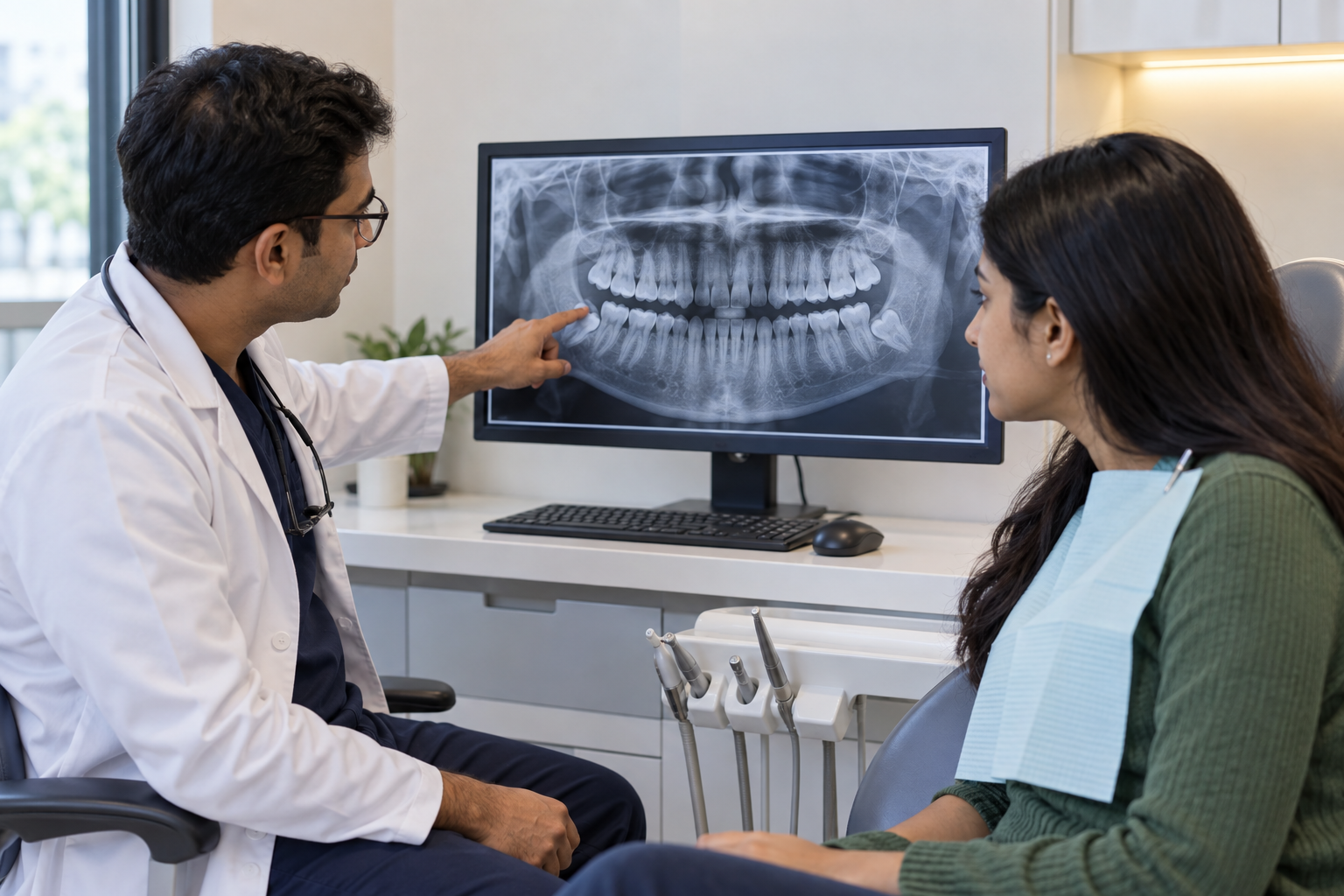
Common causes of pain near a wisdom tooth
A partially erupted tooth can create a flap of gum that traps plaque and food. Inflammation around it is called pericoronitis and may cause tenderness, swelling, an unpleasant taste, or difficulty opening the mouth. Wisdom teeth can also develop decay or gum disease because they are hard to clean. An impacted tooth may press against a neighbouring tooth or be associated with a cyst, although not every impacted tooth causes symptoms.
Pain at the back of the jaw is not always from a wisdom tooth. Decay in another molar, a cracked tooth, jaw-joint pain, sinus problems, or muscle tension can feel similar. Examination and, when appropriate, an X-ray help identify the source.
When to arrange a prompt dental visit
Book an assessment if pain lasts more than a short time, keeps returning, affects sleep or eating, or is accompanied by swelling, bad taste, fever, or difficulty opening your mouth. Seek urgent medical care if facial or neck swelling is spreading, or if breathing or swallowing becomes difficult.
Do not wait for severe pain if a dentist has already advised monitoring an impacted tooth. Regular reviews can detect changes in the wisdom tooth and the adjacent molar.

Safe steps until your appointment
Keep the area as clean as comfort allows with gentle brushing. Warm salt-water rinses may soothe irritated gum tissue, but they do not remove the cause of infection. Choose softer foods and avoid chewing on the painful side. Over-the-counter pain relief may help if it is safe for you; follow the package directions and ask a pharmacist or doctor if you have medical conditions, take other medicines, are pregnant, or are unsure.
Do not place aspirin, clove oil, or other chemicals directly against the gum. Do not start leftover antibiotics. Antibiotics are not a substitute for dental treatment and are used only when a clinician decides they are indicated.
Does every wisdom tooth need removal?
No. Wisdom teeth that are healthy, fully erupted, functional, painless, and easy to clean may be monitored. Removal may be considered when there is repeated infection, untreatable decay, damage to a neighbouring tooth, gum disease, a cyst or other pathology, or when the tooth interferes with necessary treatment.
The decision balances current disease, future risk, surgical difficulty, age, health, and patient preference. Preventive removal of a symptom-free tooth is not an automatic rule; the dentist should explain why monitoring or removal is recommended in your case.
What an assessment involves
The dentist will ask about the pattern of pain and examine the tooth, gum, bite, and neighbouring teeth. An X-ray may be needed to see the tooth’s position, roots, surrounding bone, and proximity to nerves or the sinus. More complex cases may be referred to an oral surgeon.
If removal is planned, you should receive information about anaesthesia, aftercare, expected swelling, and risks such as dry socket, infection, bleeding, or altered sensation. Risk varies with the tooth’s position and your health.
Preventing repeat flare-ups
If monitoring is appropriate, clean the back of the mouth carefully and attend reviews at the interval advised. A small-headed or single-tufted toothbrush may help reach behind the second molar. Persistent inflammation despite good cleaning needs reassessment.
To understand how pain from an infected tooth may be treated when the tooth can be saved, see What Actually Happens During a Routine Root Canal Procedure.
Get wisdom tooth pain checked in Kalyan Nagar
For an examination, call MIZ Dental Clinic on +91 86188 26027 or visit #232, 10th Main, 100 Feet Road, HRBR Layout, Kalyan Nagar, Bengaluru 560043. A dentist can identify the cause and explain whether cleaning, treatment, monitoring, or removal is appropriate.
Sources reviewed: NHS: Dental Treatments—Wisdom Teeth; NHS England: Oral Surgery Clinical Standard.