
Clear aligners and fixed braces can both move teeth, improve alignment, and correct certain bite problems. The better option is not simply the one that looks less noticeable. It depends on the type and complexity of tooth movement, your age and oral health, how reliably you can follow instructions, and the clinician’s treatment plan.

How fixed braces work
Braces use brackets attached to the teeth and wires that guide movement over time. Because they stay in place, they work continuously and do not depend on remembering to put them back after meals. Braces can manage many straightforward and complex movements, although suitability still requires an orthodontic assessment.
Traditional metal braces are visible, while ceramic brackets may be less noticeable. Patients need to clean carefully around brackets and wires and avoid foods that can damage the appliance. Temporary tenderness is common after fitting and adjustments.
How clear aligners work
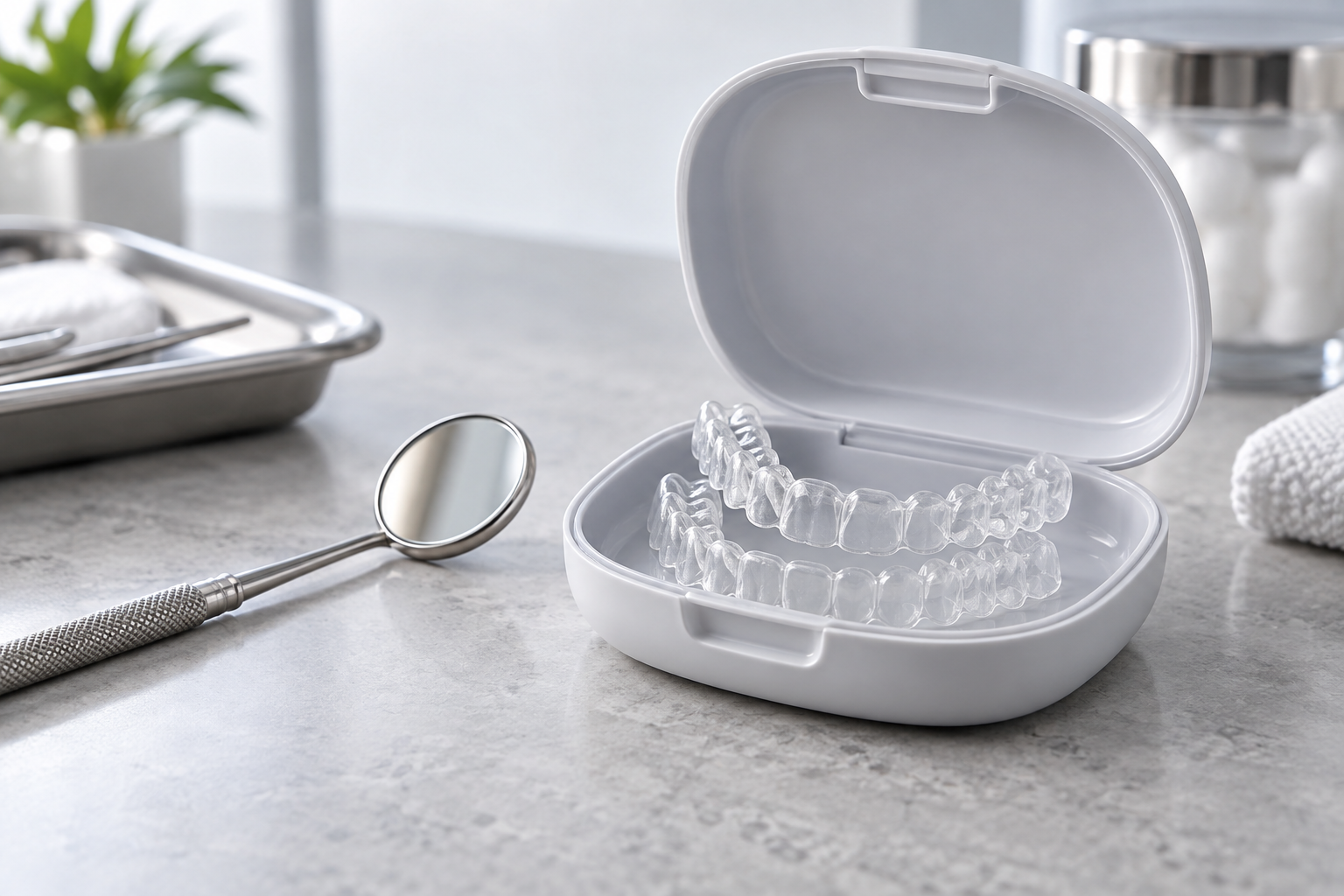
Clear aligners are removable trays made to move teeth in planned stages. They are worn for most of the day and changed according to the prescribed schedule. They can be removed for eating, drinking anything other than plain water, brushing, and flossing.
Their main appeal is a discreet appearance and easier access for cleaning. Their main limitation is compliance: trays only work while they are being worn. Lost trays, frequent removal, or long periods without them can delay treatment. Some movements may require attachments on teeth, elastics, or a different appliance, and not every case is best treated with aligners alone.
Appearance and daily routine
Aligners are usually less visible, but they are not invisible in every situation. Small tooth-coloured attachments may be required. Braces are more noticeable, although many patients enjoy choosing elastic colours or prefer not having to manage removable trays.
With aligners, you remove trays before meals, clean your teeth, and reinsert them. With braces, food choices require more care and cleaning takes longer. Consider school, work, travel, sports, speaking commitments, and whether you can follow a consistent routine.
Oral hygiene during treatment
Healthy teeth and gums are essential before and during orthodontic movement. Plaque left around brackets can contribute to cavities, gum inflammation, and permanent white marks. Aligners can trap liquid and plaque against teeth if worn after sugary or acidic drinks without cleaning.
Brush twice daily with fluoride toothpaste, clean between teeth every day, and follow instructions for cleaning the appliance. Keep routine dental checks in addition to orthodontic appointments. If existing enamel wear concerns you, read Understanding Tooth Enamel Wear and How to Protect It Daily.
Comfort, speech, and emergencies
Both systems can cause pressure or tenderness when teeth begin moving. Brackets may rub the cheeks until the mouth adapts, while aligner edges or attachments can occasionally irritate soft tissue. Aligners may temporarily affect speech. A broken wire or bracket needs professional advice; do not attempt major repairs at home.
Treatment time and retention
Treatment length depends on the problem being corrected and how the teeth respond—not only on the appliance. Missed visits, broken braces, or inconsistent aligner wear can extend treatment. After either option, retainers are normally required to help maintain the result. Teeth can shift throughout life, so retention is part of orthodontic care, not an optional extra.
Questions to ask at your consultation
Ask what bite or alignment problem has been diagnosed, which options can predictably treat it, whether extractions or other procedures may be needed, how often reviews occur, and what the full fee includes. Also ask about refinements, replacement aligners, emergency visits, retainers, and the likely consequences of not treating the problem.
Avoid choosing an appliance based solely on an online photo or advertisement. Proper planning requires an in-person examination and, when indicated, photographs, scans or impressions, and X-rays.
Explore teeth-straightening options in Kalyan Nagar
For an initial dental assessment and discussion of appropriate orthodontic referral or treatment options, call MIZ Dental Clinic on +91 86188 26027. Visit #232, 10th Main, 100 Feet Road, HRBR Layout, Kalyan Nagar, Bengaluru 560043.
Questions to ask before choosing
Ask what problem is being corrected, how long treatment is expected to take, how often reviews are needed, and what happens if an aligner is lost or a bracket breaks. Request a clear explanation of retainers, total fees, and any limits of the proposed plan. A good decision is based on diagnosis and realistic expectations—not appearance alone.
Sources reviewed: American Dental Association: Braces; CDC: About Oral Health.